Plan the route
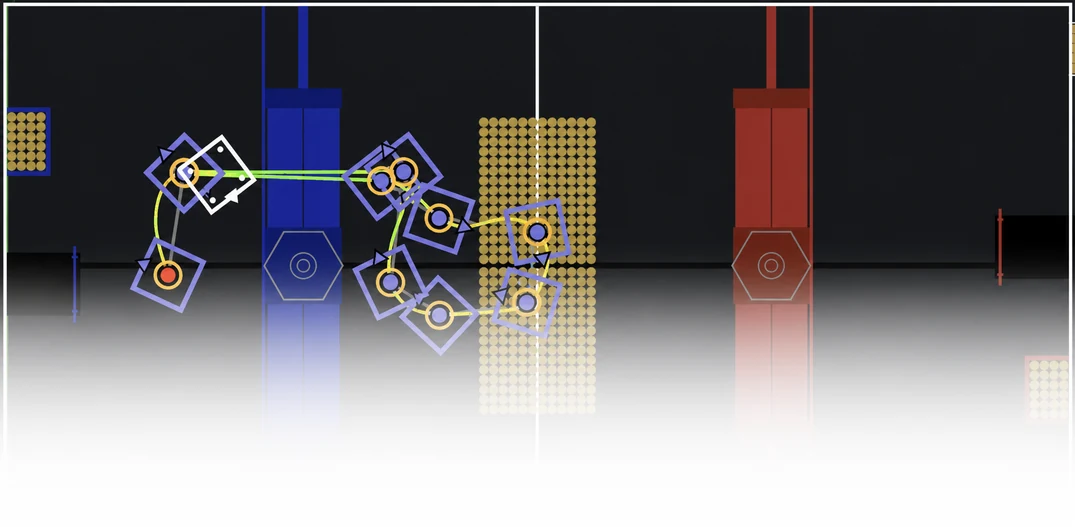
Choreo generates the route before a match. The trajectory includes position, heading, linear and angular velocity, acceleration and wheel-force demands.
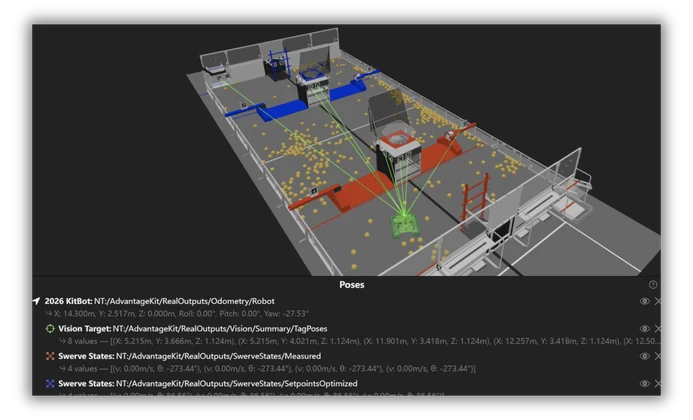
During a run, a holonomic controller compares the planned position and heading with the robot’s estimated position and heading. It corrects the difference while the robot follows the route.
Set the starting conditions
The manual describes finding the reference positions of the turret, hood and extension in parallel before the autonomous routine. This process is called homing. The robot’s position estimate starts at the first trajectory segment’s specified position and heading.
When a route is mirrored, the software must transform position, heading and the relevant velocity components consistently. Mirroring only the drawn path would leave the movement commands inconsistent.
Coordinate the mechanisms
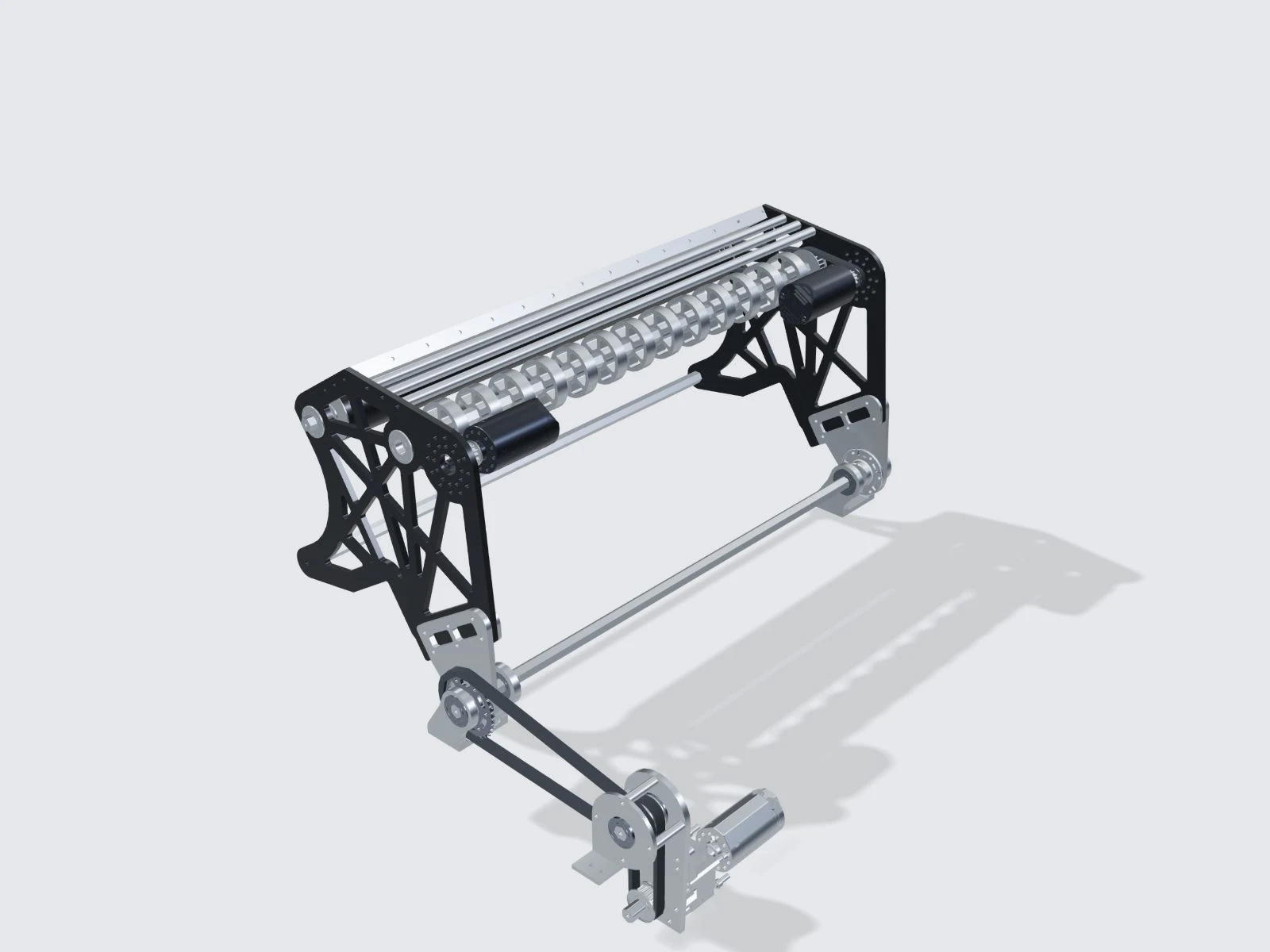
Intake, extension, feeding and shooting commands run alongside the trajectory segments. Their start, finish and interruption conditions determine when each mechanism operates.
Logs help compare mechanism timing with robot movement. Reaching a waypoint does not confirm that a ball was collected or a shot was completed. Reviewing both the route and command sequence shows where an autonomous routine needs adjustment.